First Look at Hiroshi Fujiwara’s New Fragment Edition Seiko Metronome Watch

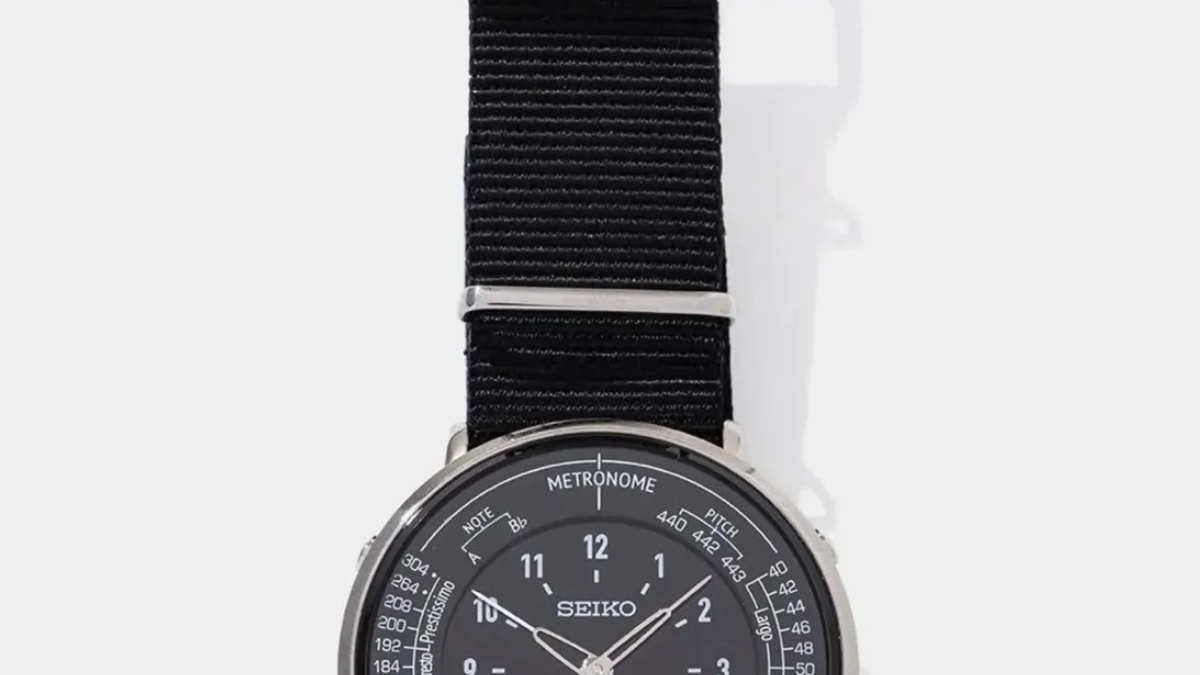
In a market crowded with dive watches and heritage reissues, Seiko has quietly revived one of its strangest modern releases- the Metronome and handed it to one of Japan’s most influential designers for a subtle but meaningful refresh.
Originally introduced in 2022, the Metronome never tried to be a conventional tool watch. It didn’t chase depth ratings or rotating bezels. Instead, it targeted musicians and rhythm-focused creatives, embedding a working metronome directly into the dial. That niche idea made it one of the brand’s most unusual quartz projects in recent memory.
For 2026, the watch returns through a collaboration led by Hiroshi Fujiwara, widely recognized for shaping modern streetwear culture and founder of Fragment. The release surfaced quietly via his concept retail platform VA Tokyo rather than through a global marketing push, reinforcing its insider appeal.
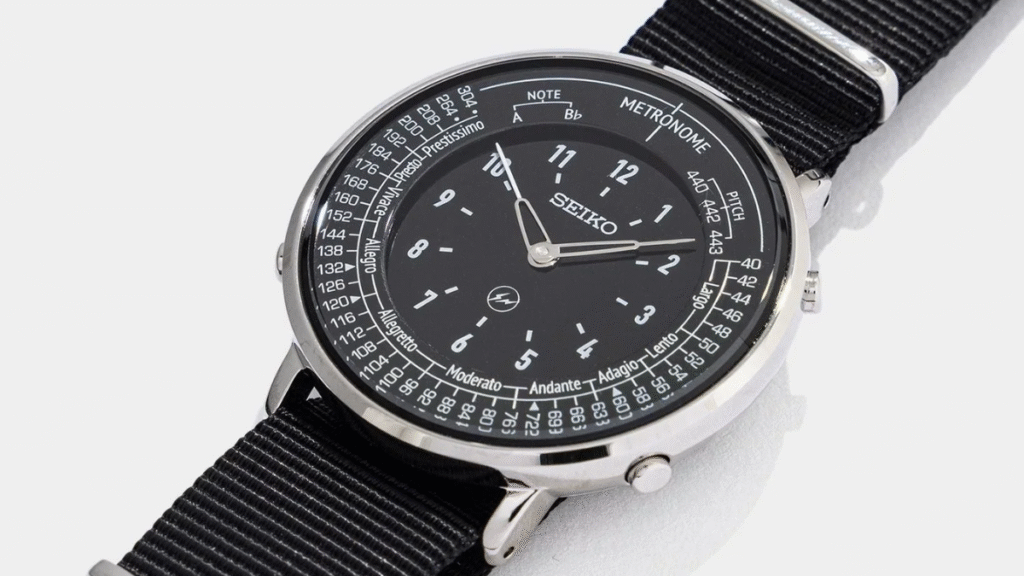
Two versions were introduced: a black dial and a white dial, both retaining the signature tempo scale that runs from 40 to 304 beats per minute. The design stays intentionally minimal, almost clinical, emphasizing function over visual noise.
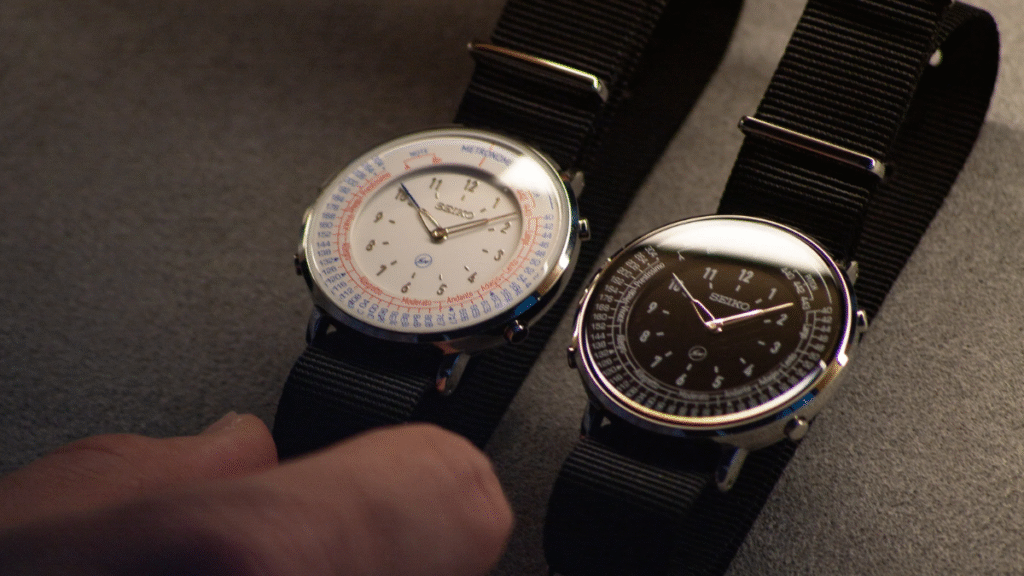
The watch runs on Seiko’s PA50 quartz movement and comes in a compact 36mm case paired with a black NATO strap and polished hardware. Branding is restrained, with subtle Fragment detailing rather than loud collaboration cues. It feels less like a hype drop and more like a design exercise.
At retail, the watch launched around ¥44,000 (roughly $288). But availability evaporated quickly. Early resale listings are already pushing close to the $1,000 mark, a sign that scarcity and Fujiwara’s involvement are driving demand as much as the product itself.
What’s interesting is how this release fits into Seiko’s broader strategy. Instead of relying purely on nostalgia or mass-market divers, the brand continues to experiment with niche tools and cultural crossovers. Recent collaborations and releases across the wider Seiko ecosystem, including projects tied to gaming and more accessible entries from Grand Seiko, suggest a deliberate push to stay culturally relevant while protecting its enthusiast credibility.
The Metronome isn’t designed for everyone. It’s impractical for most traditional watch buyers and doesn’t pretend otherwise. But that’s the point. It represents the kind of experimental product that keeps a legacy brand interesting, especially in an era where many releases feel iterative rather than inventive.
Whether this edition sees a broader rollout remains unclear. For now, it sits in that familiar Seiko space: quietly released, quickly sold out, and already building cult status among collectors who appreciate the odd corners of the watch world.
And in a category driven by repetition, a watch that literally measures rhythm instead of time might be the most “tool-focused” idea of them all.