
Nodus Nomad Gobi GMT Field Watch Debuts After Real Desert Expedition


In an era where most tool watches are tested in labs, the Nodus Nomad Gobi GMT field watch arrives with something far rarer: proof. Not simulated. Not staged. Real-world survival in one of the harshest environments on Earth. And if early demand signals are anything to go by, this could be one of those under-the-radar releases collectors wish they hadn’t slept on.
The story behind the Nodus Nomad Gobi GMT field watch doesn’t begin in a design studio. It begins in the Gobi Desert, where a team of 30 explorers retraced the historic route of Roy Chapman Andrews, a century after his groundbreaking expeditions reshaped palaeontology. For two weeks, they endured extreme heat, violent sandstorms, and complete isolation. On their wrists? Prototype versions of what would become the Nomad.
This isn’t just marketing. Its origin.
The modern watch industry leans heavily on heritage storytelling. But the Nodus Nomad Gobi GMT field watch flips that formula. Instead of borrowing legacy, it creates its own.
During the expedition, these watches weren’t handled with care; they were pushed to failure. Temperatures climbed as high as 124°F. Sudden rainstorms hit without warning. Sand infiltrated everything. And yet, according to expedition leader Bob Atwater, the watches didn’t just survive, they excelled.
That feedback loop became the foundation for the production model. What you’re buying isn’t a concept. It’s a refined survival tool shaped directly by explorers who depended on it.
Engineering
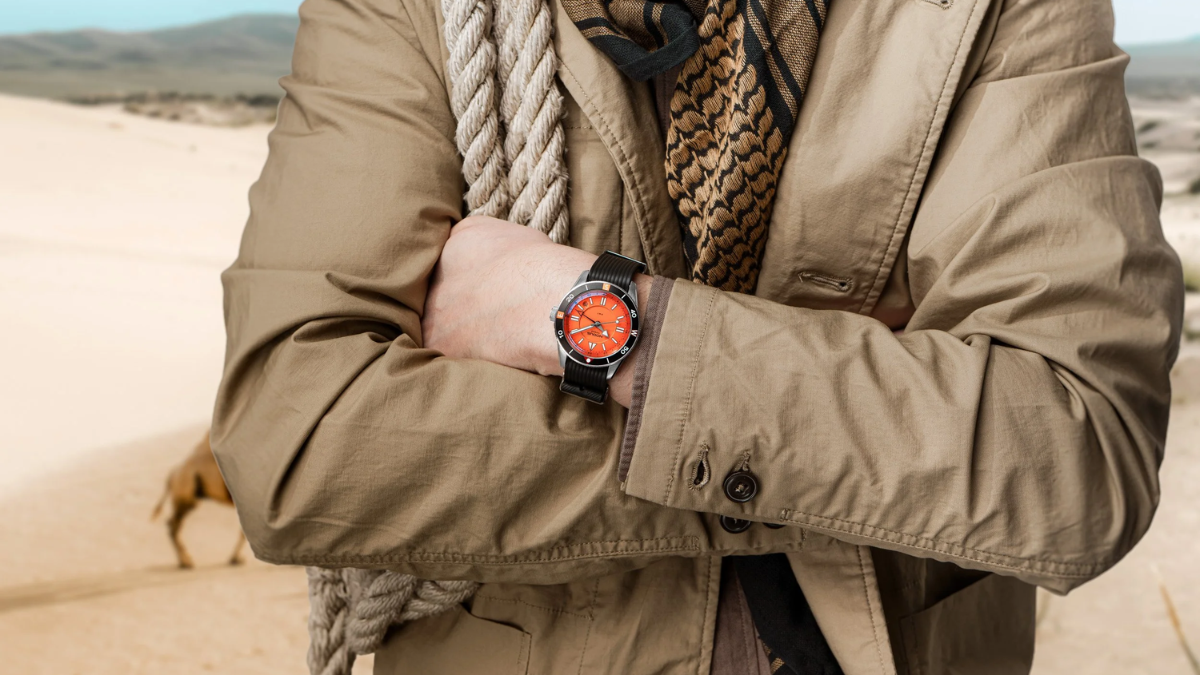
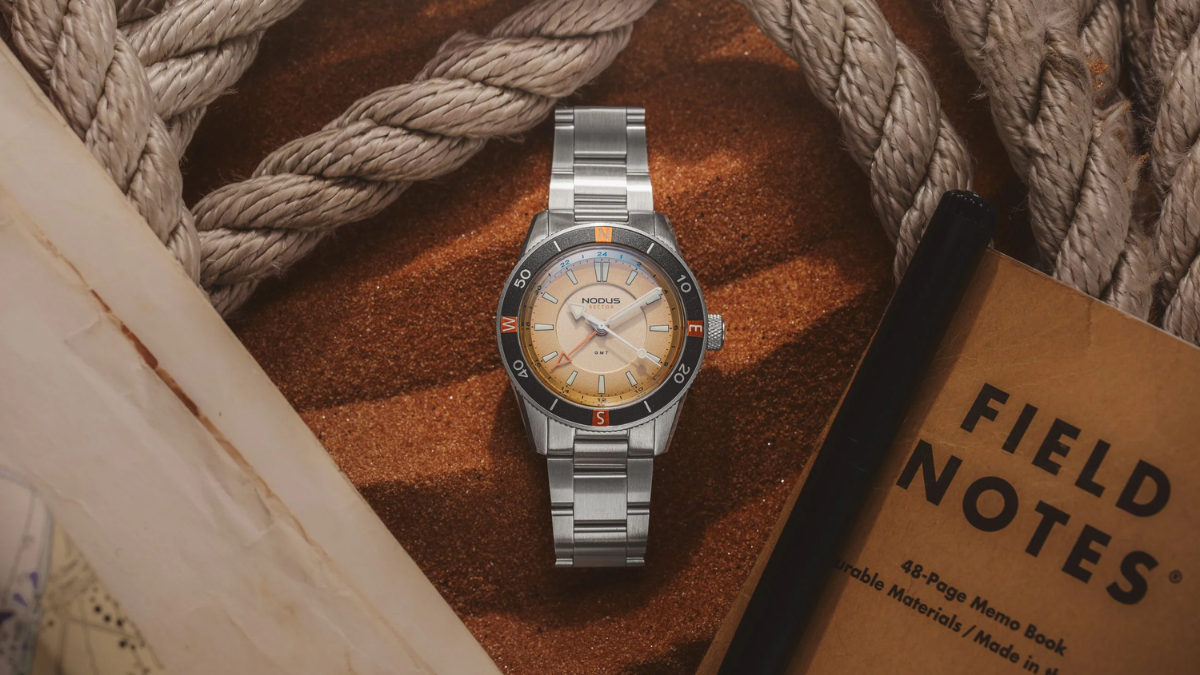
Most watch updates are incremental. The Nodus Nomad Gobi GMT field watch feels more deliberate. The bezel has been reworked into a bi-directional 60-click system, designed not just for timing, but for real navigation. This isn’t decorative, it’s functional. A clearer North indicator ensures orientation in environments where digital tools can fail.
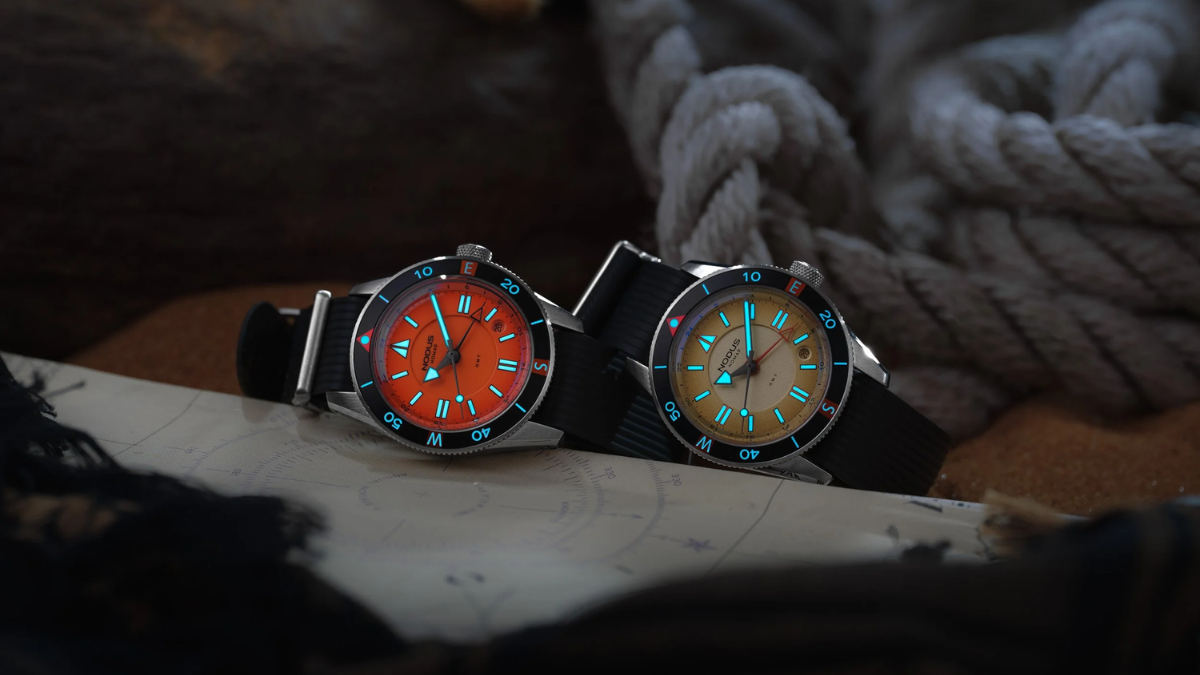
The dial has also been rethought. Larger cardinal markers and thicker index outlines improve readability instantly, especially in harsh light conditions. Generous application of Swiss Super-LumiNova® BGW9 Grade A means visibility doesn’t disappear when the sun does.
Even the strap tells a story. The original metal bracelet prototype was abandoned in favour of a ribbed FKM rubber strap from StrapHabit®, the exact type worn during the expedition. That decision alone says everything about priorities: performance over aesthetics.
Specs
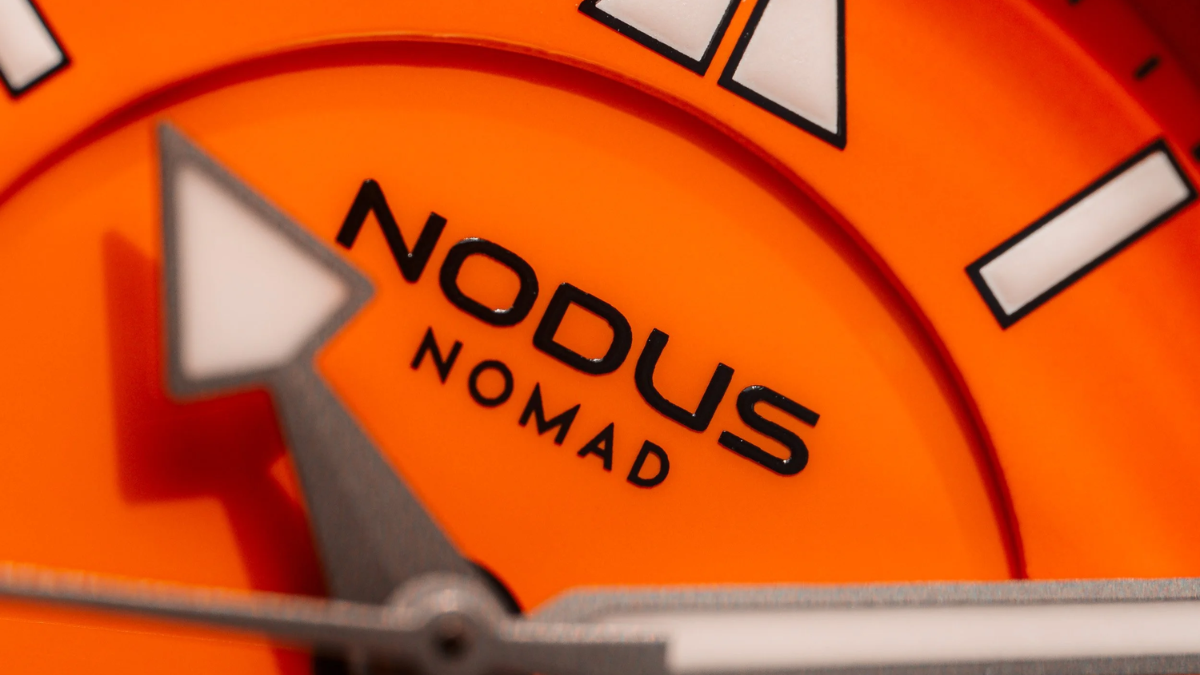
Underneath the narrative, the Nodus Nomad Gobi GMT field watch delivers solid, no-nonsense specifications that align with its purpose.
The case is crafted from 316L surgical-grade stainless steel, measuring a practical 38mm wide with a 40mm bezel and a compact 47mm lug-to-lug. At 11.7mm thick, it strikes a balance between durability and wearability—exactly what you’d want from a modern field watch.
A screw-down crown and 100 meters of water resistance reinforce its all-terrain capability. The sapphire crystal, flat on top with a domed underside, includes an anti-reflective coating to reduce glare in bright desert conditions.
Inside, the watch runs on the TMI NH34 GMT movement, offering dual-time functionality with a 41-hour power reserve. Accuracy is regulated to approximately ±10 seconds per day, which is respectable at this price point, and more importantly, consistent.
Each Nodus Nomad Gobi GMT field watch features an individually numbered caseback engraved with the RC Andrews Legacy Expedition graphic. It’s also marked “Official Timekeeper” and “Field Tested.”
In a market flooded with limited editions that feel arbitrary, this one has context. Every piece ties back to a documented expedition. That kind of narrative tends to age well in the collector space, especially as the brand grows.
Price
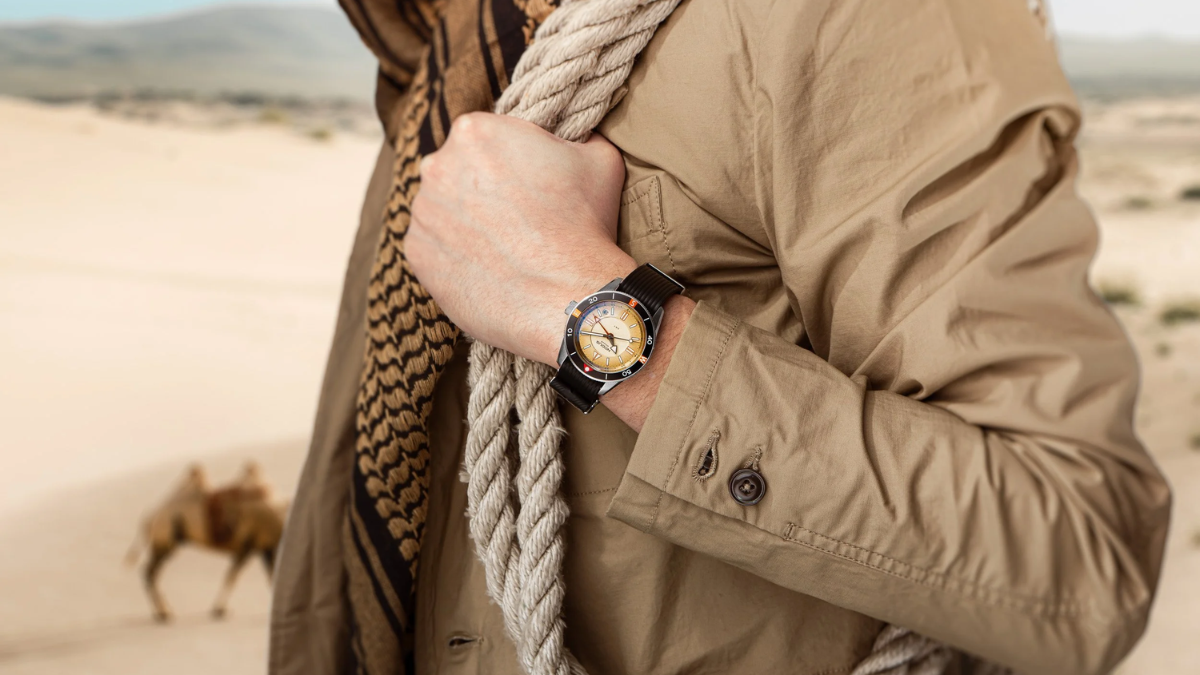
At $575, the Nodus Nomad Gobi GMT field watch sits in a highly competitive segment, but it doesn’t behave like a typical entry-level release.
You’re getting a GMT complication, a compass bezel, real expedition credibility, and thoughtful design refinements. Comparable watches often force you to choose between features or storytelling. This one delivers both.
Shipping timelines also hint at controlled availability. Orders placed before April 13 are scheduled to begin shipping mid-May 2026, while later orders shift into mid-June. That staggered rollout could quietly build waitlist pressure if demand spikes. And based on early reactions, that’s a real possibility.
The timing of this release matters. There’s a growing shift among watch buyers, especially younger collectors, toward authenticity. Not just heritage logos, but real stories. Real usage. Real credibility.
The Nodus Nomad Gobi GMT field watch taps directly into that trend. It doesn’t try to compete with luxury giants. Instead, it positions itself as a modern tool watch with genuine field validation. That’s a powerful narrative, particularly in a segment where many watches never leave desks.
If Nodus continues to build on this kind of storytelling, early releases like this could become reference points for the brand’s identity.
Gobi vs Signal
Alongside the Gobi variant, Nodus is also offering the “Signal” version at the same $575 price point. While both share identical technical foundations, the difference lies primarily in aesthetics.
The Gobi leans into a matte fumé tan dial that reflects its desert origins, arguably the more thematic choice. The Signal variant, on the other hand, offers a slightly different visual tone for those who want the same functionality with a distinct look. Either way, the core appeal remains unchanged: a field watch shaped by real-world testing.
Final Thoughts
Right now, the Nodus Nomad Gobi GMT field watch is still flying slightly under the radar. That won’t last. Between its expedition-backed story, thoughtful upgrades, and accessible pricing, it hits a rare sweet spot. If demand builds, as it often does with releases that feel different, early buyers could find themselves holding something far more significant than a $575 field watch. Because watches like this don’t just tell time. They carry stories. And the best ones only get more valuable with time.