How to Read a GMT Watch in 2026: Simple Steps, Hidden Secrets & Travel Pro Tips

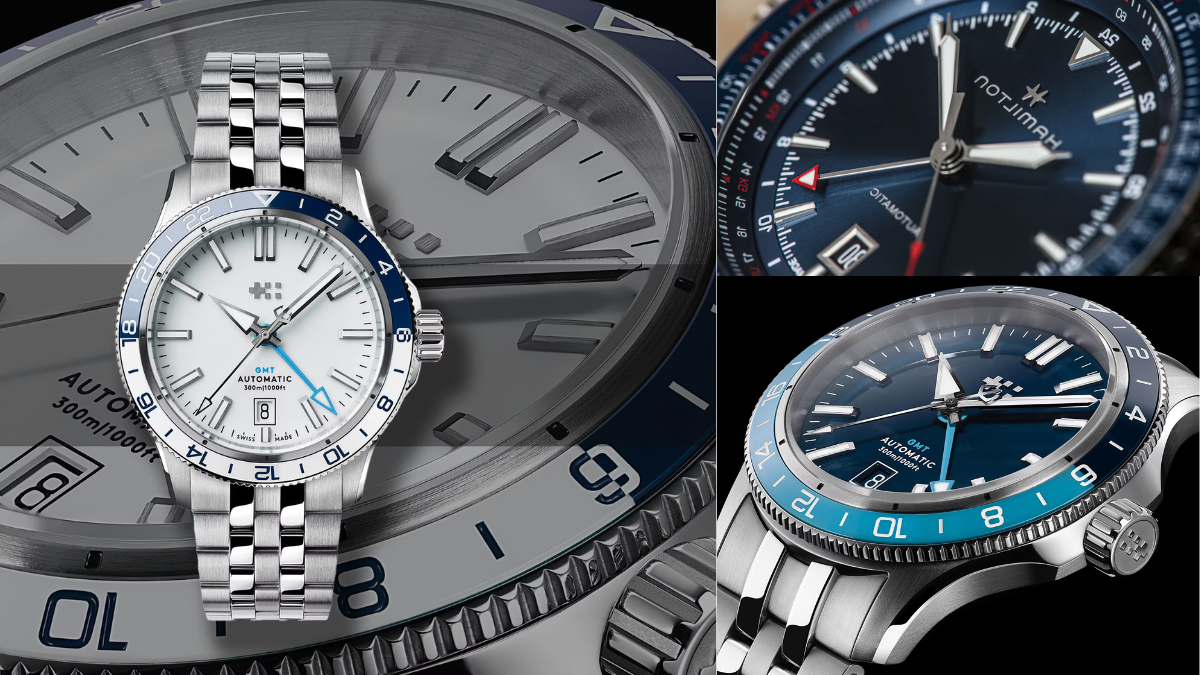
If you have ever looked at a GMT watch and thought, “Why are there so many hands and numbers?”, you are not alone.
GMT watches are designed to track multiple time zones at once, making them incredibly useful for travellers, pilots, remote workers, and anyone with family abroad. But for beginners, reading a GMT watch can feel overwhelming.
This is exactly why GMT watches are perfect for frequent travellers who want instant clarity across time zones without mental math.
The good news? Once you understand what each hand and scale does, reading a GMT watch becomes second nature.
This guide explains how to read a GMT watch in the simplest possible way. You will learn what the GMT hand means, how to read GMT bezel numbers, and how to track two or even three time zones without stress.
If you want a deeper understanding of movements, types, and real-world use cases, make sure you read our complete pillar guide, GMT Watches Explained: How They Work, How to Use & Why Travellers Love Them.
GMT Hand Before Reading Time
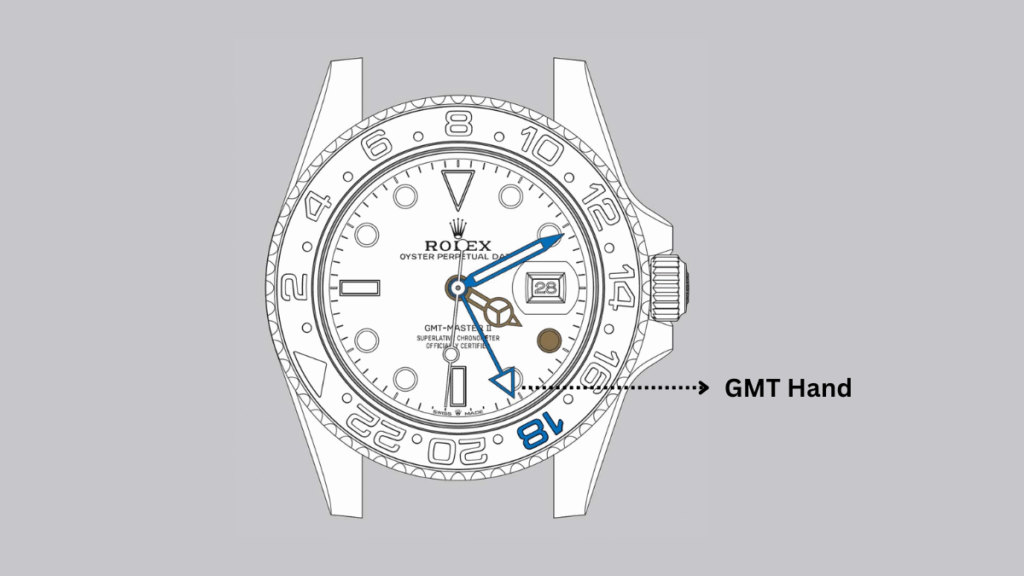
Before we talk about how to read a GMT watch, we need to talk about the meaning of the GMT hand, because this is where most people get confused.
A GMT watch has four hands instead of three.
• Hour hand
• Minute hand
• Second hand
• GMT hand
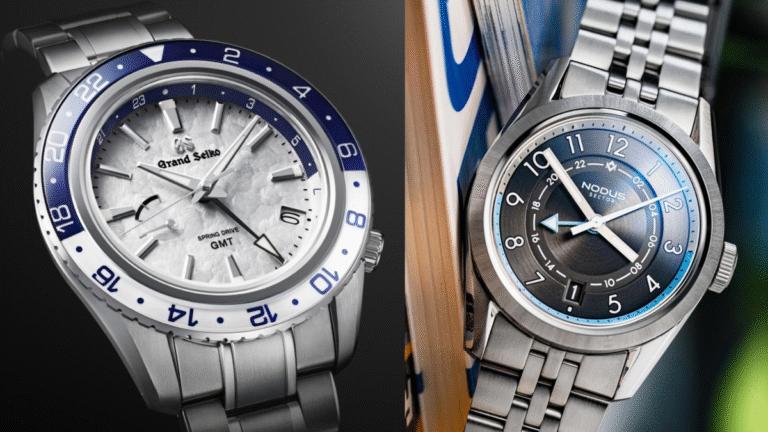
The GMT hand usually has a different colour or arrow tip. It moves once every 24 hours, not 12. That is the key.
Think of the GMT hand as your global reference. It points to a 24-hour scale, either printed on the dial or on the bezel. This helps you know whether it is day or night in another time zone.
Here is a simple way to remember it.
- The regular hour hand is your local life.
- The GMT hand is your global life.
When people ask me how to tell time on a GMT watch, I always say this. First, forget the bezel. Focus only on the GMT hand and the 24-hour numbers. Once you understand that relationship, everything else becomes easy.
The concept comes from aviation needs, and understanding the history of GMT watches helps explain why the 24-hour hand exists in the first place.
How to Read a GMT Watch Step by Step
Now, let us get practical. This is the simplest step-by-step method to read a GMT watch without overthinking.
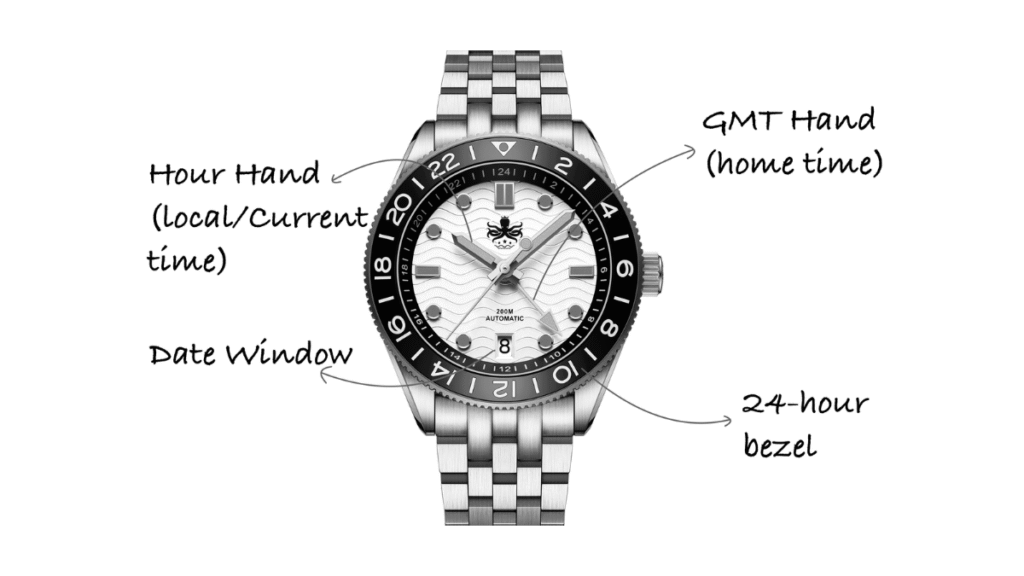
Step 1: Read the local time first
Look at the regular hour and minute hands. Ignore the GMT hand for a moment. This is your local time, the time where you currently are, just like any normal watch.
Example:
- The hour hand is at 10
- Minute hand at 8 minutes
Your local time is 10:08. This part works exactly like a normal watch.
Step 2: Find the GMT hand (Second Time Zone)
Identify the extra hand. It usually has an arrow tip or a bright colour.
Step 3: Match the GMT hand to the 24-hour scale
Look where the GMT hand points on the 24-hour numbers. That number is your second time zone.
For example, if the GMT hand points to 14, that means 2 PM. If it points to 2, that means 2 AM.
That’s it, you’re now reading two time zones at once.
Step 4: Check day or night instantly
This is where GMT watches shine. No guessing. No mental math. You instantly know if it is daytime or nighttime in the second time zone.
Once you practice this a few times, reading a GMT watch becomes automatic.
Once you master this, even entry-level models become useful, which is why many beginners start with the best GMT watches under $1,000.
How to Read Three Time Zones Using a Rotating GMT Bezel
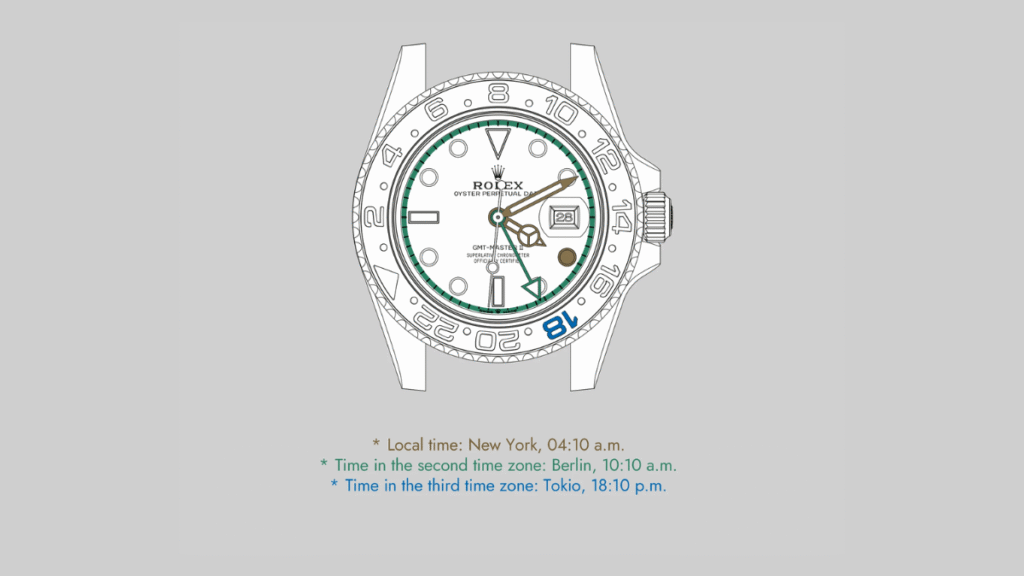
Some GMT watches include a rotatable 24-hour bezel. This 24-hour bezel allows you to track a third time zone.
This is where things get interesting and where many people give up too early. Do not worry. I will make it simple. If your watch has a rotating GMT bezel, you can track a third time zone.
Here is how it works.
- Local time with the main hands
- Second time zone with the GMT hand
- Third time zone using the rotated bezel
Let us say your GMT hand shows London time. Now you rotate the bezel to align another city’s time with the GMT hand. The numbers on the bezel now represent a third time zone.
This is where GMT bezel numbers make all the difference. The bezel is just another 24-hour scale. Nothing more.
This feature is popular among: Frequent travellers, International business professionals, and Remote workers.
Common Mistakes People Make When Reading GMT Watches
I see the same mistakes again and again. Let me save you from them.
1. Confusing the GMT Hand with the Hour Hand
The GMT hand usually has an arrow tip and moves more slowly. Always check the colour and length.
2. Forgetting the 24-Hour Format
If the GMT hand points at 20, that’s 8 PM, not 8 AM.
3. Over-adjusting the bezel
Some people rotate the bezel constantly; your second time zone reading could be wrong.
4. Not practising
Reading a GMT watch is a skill. It improves with repetition. Give yourself a few days. Once you avoid these mistakes, telling time on a GMT watch becomes second nature.
Fixed Bezel vs Rotating Bezel
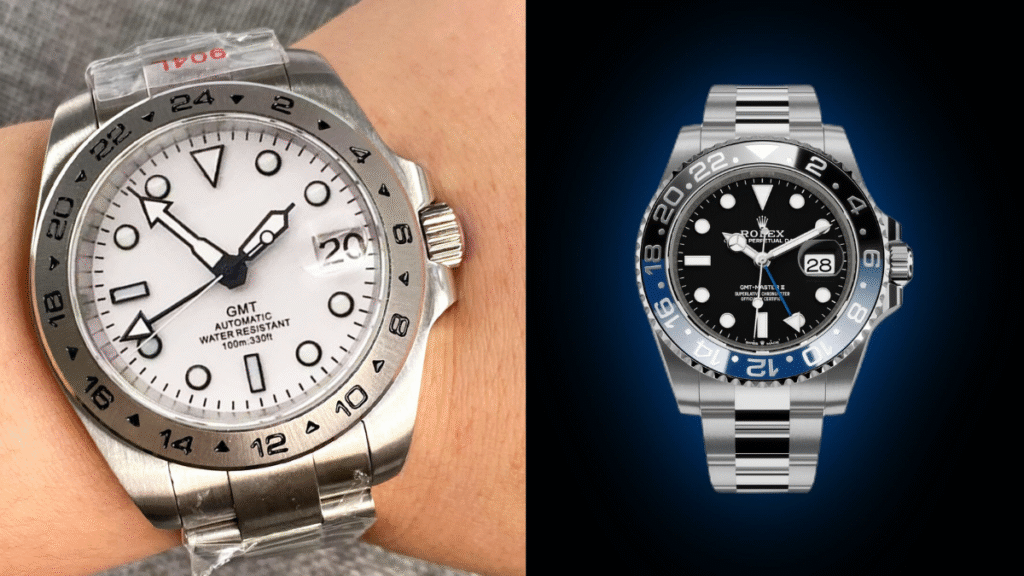
Not all GMT watches are the same. The bezel type changes how you read them.
Fixed bezel GMT watches
These are simpler. The 24-hour scale is printed or engraved and does not move. You can track two time zones easily. These are great for beginners.
Rotating bezel GMT watches
These give more flexibility. You can track a third time zone. They require more attention but reward you with more power.
Neither is better. It depends on how you travel and work. If you mostly track home and local time, a fixed bezel is perfect. If you juggle global teams, rotating bezels becomes addictive.
If you want this flexibility without luxury pricing, several of the best GMT watches under $2,000 offer rotating bezels with excellent usability.
FAQ
What does the GMT hand actually show?
The GMT hand shows a second time zone using a 24-hour scale.
Can I read a GMT watch without using the bezel?
Yes. Many people never touch the bezel and still use GMT watches daily.
Is a GMT watch hard to use for beginners?
No. Once you understand the GMT hand meaning, it is simple.
Why does my GMT hand move more slowly than the hour hand?
Because it completes one full rotation in 24 hours instead of 12.
Do all GMT watches work the same way?
The principle is the same, but bezel type and movement design can change the experience.
Conclusion
GMT watches only look complicated at first. In reality, they follow a simple system. Spend a few minutes practising, and soon reading a GMT watch will feel as natural as checking your phone.