
Introducing: Omega Constellation Observatory 2026 – First 2-Hand Chronometer?


Something unusual is happening in the world of high-end watchmaking, and if you’re even remotely serious about precision, heritage, or long-term collectability, this is the kind of release you don’t ignore.
Without loud marketing gimmicks or headline-grabbing complications, OMEGA has quietly introduced a collection that may redefine how accuracy itself is measured. The new Constellation Observatory isn’t just another luxury launch; it’s a structural shift in horology, one that could ripple across the entire industry.
And here’s the twist: it doesn’t even have a second hand. At first glance, that sounds almost absurd. But behind that minimalist dial lies one of the most technically disruptive ideas the watch world has seen in years, and early signs suggest collectors are already circling.
For decades, the rules of chronometer certification have been fixed. To prove a watch’s accuracy, you needed to track the second hand over time, visually confirming how well it performed under different conditions.
No second hand? No certification. Simple. That rule has now been broken.
The First Two-Hand Master Chronometer
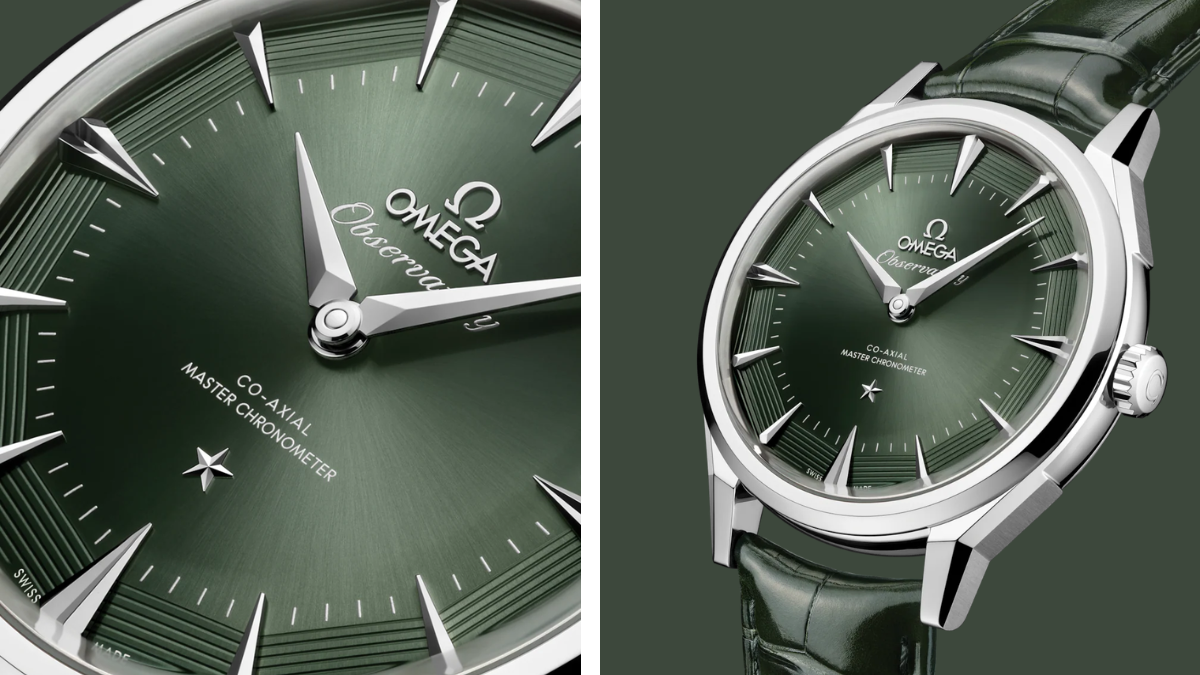
The Constellation Observatory becomes the first two-hand watch in history to achieve full Master Chronometer certification, a benchmark governed by METAS. It’s a milestone that might sound technical on the surface, but in reality, it represents a complete rethinking of how precision is verified. Instead of relying on visual tracking, OMEGA has turned to something far more advanced: sound.
Through its independent testing facility, the Laboratoire de Précision, each movement is monitored acoustically over 25 days. Every tick, every microscopic variation, is captured and analyzed continuously. Temperature, pressure, and position are all variables that are tracked simultaneously.
The result? A level of precision testing that doesn’t just meet existing standards, it evolves them. And for collectors, that matters more than it might seem.
Two-hand watches have traditionally been seen as elegant, even understated, but rarely as technical powerhouses. They belonged to dress watch territory, not the cutting edge of performance. That perception just collapsed.
By removing the seconds hand while still surpassing chronometer standards, OMEGA has effectively elevated minimalist watch design into the highest tier of precision engineering. It opens the door for an entirely new category of watches, ones that combine visual simplicity with extreme technical credibility.
And if history tells us anything, being first matters. Collectors don’t just buy watches; they buy milestones. And this is exactly that: the first of its kind, backed by a legacy brand that has consistently shaped modern chronometry.
A Collection Rooted in History

The name “Constellation” isn’t new, far from it. Since its launch in 1952, the Constellation line has represented OMEGA’s obsession with chronometric excellence, inspired by the brand’s dominance in observatory trials between 1933 and 1952.
Those historic victories are still present today, literally. Flip the watch over, and you’ll find the iconic observatory medallion engraved with eight stars, symbolizing six first-place awards and two world records. But what makes this new collection different is how deeply it connects past and future.
You’ll see it in the details:
- The unmistakable pie-pan dial, now refined with dodecagonal precision
- The sharp, architectural dog-leg lugs are a signature of vintage Constellations
- The faceted kite-shaped hour markers, polished to modern standards
Every element feels deliberate, not nostalgic, but evolved.
The Case
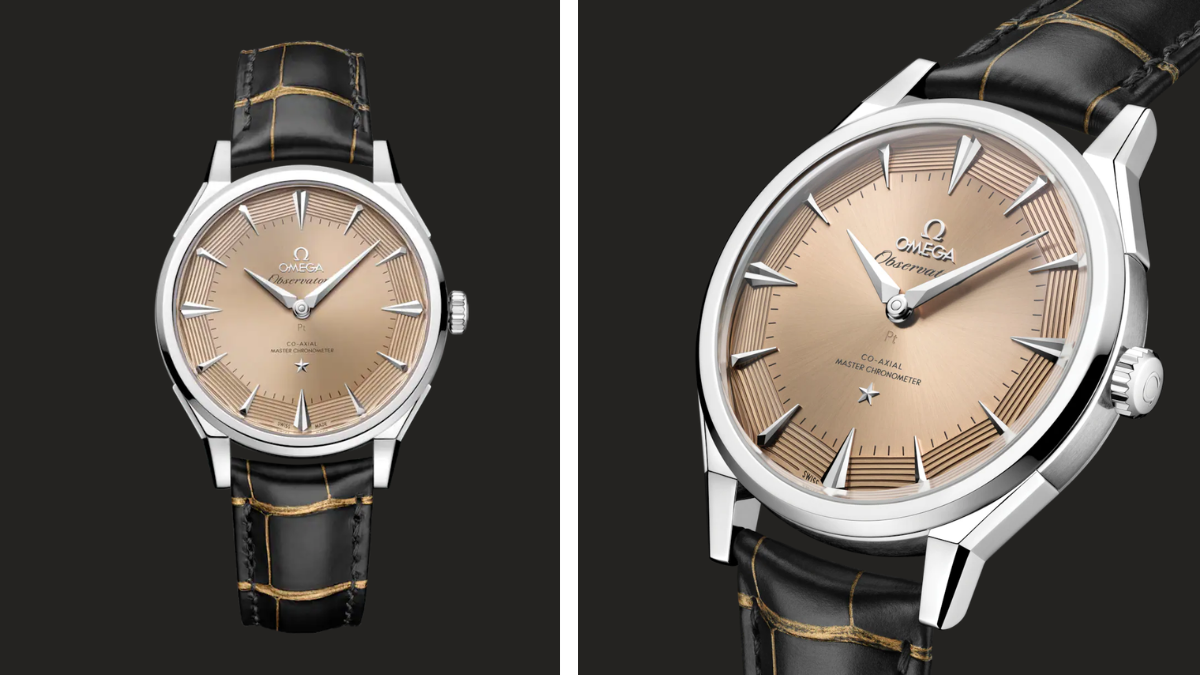
At 39.4mm, the Constellation Observatory lands in a sweet spot that feels increasingly rare in today’s oversized watch landscape. It’s neither aggressively modern nor vintage-small. It’s balanced, and that’s exactly the point.
The proportions are carefully considered:
- Diameter: 39.4mm
- Thickness: ~12.2mm
- Lug-to-lug: 47.2mm
On the wrist, it wears with quiet confidence; not flashy, not understated, but intentional. The case is available in multiple materials, each targeting a different type of collector:
- O-MEGASTEEL for durability and entry-level access
- Moonshine™, Sedna™, and Canopus Gold for precious metal enthusiasts
- A platinum-gold hybrid for those chasing rarity and weight
This isn’t just variety, it’s strategic positioning across multiple tiers of the luxury market.
The Dial

If you know anything about vintage Constellations, you already understand the significance of the dial. OMEGA didn’t just revive the pie-pan design; it elevated it.
The dodecagonal structure plays with light in a way that feels almost architectural, especially in the precious metal versions where hand-guilloché finishing creates a subtle, shifting texture across the surface. In steel models, the approach is more contemporary:
- Sunray blue and green finishes
- Opaline silver with warm gold accents
- A striking black ceramic variant with deep visual contrast
Each version tells a different story, and more importantly, creates multiple entry points for collectors. Because let’s be honest: this is the kind of watch where people don’t stop at one.
The Movement

At the heart of the Constellation Observatory are two new calibres:
- Calibre 8914 (O-MEGASTEEL models)
- Calibre 8915 (precious metal models)
The steel models are powered by the Calibre 8914, while the precious metal variants feature the Calibre 8915. Both are automatic, both deliver a 60-hour power reserve, and both are built on OMEGA’S Co-Axial escapement architecture.
But what makes them special isn’t just their construction; it’s how they interact with the new testing system.
These movements are designed to operate within incredibly tight tolerances, enhanced by fine adjustment systems capable of achieving near-zero deviation. When paired with continuous acoustic monitoring, the result is something unprecedented: a watch that doesn’t just meet accuracy standards but is constantly measured against them in real time.
Even visually, the movements carry significance. The skeletonized rotor features the Constellation Observatory medallion, complete with eight stars representing the brand’s historic achievements in chronometry competitions.
Nine References
OMEGA hasn’t just launched a single watch; it has introduced an entire ecosystem. The Constellation Observatory collection arrives with nine references, all sharing the same core DNA but differentiated through materials, finishing, and movement execution.
At the entry point sits O-MEGASTEEL, the brand’s proprietary steel alloy. Lightweight, durable, and cleanly executed, these models offer the most accessible path into the collection while still delivering the full technical experience.
Move up, and you enter OMEGA’s signature precious metals: Sedna Gold, Moonshine Gold, and Canopus Gold. Each brings a distinct visual identity: rose, yellow, and white tones, respectively, paired with matching monochromatic dials finished using hand-guilloché techniques.
At the very top sits the platinum-gold execution, a heavier, more exclusive piece that leans fully into collector territory. This tiered approach isn’t accidental. It mirrors how modern collectors think: entry point, upgrade path, and grail.
Pricing and Availability

The Constellation Observatory collection is available now through OMEGA boutiques and authorized retailers. The Constellation Observatory launches with pricing starting around $10,900 and climbing to approximately $59,100 for the most exclusive models.
- $10,900 USD for O-MEGASTEEL models
- Up to $59,100 USD for high-end precious metal versions
On paper, that positions it competitively within the luxury segment. But here’s where things get interesting. This is not a hype-driven sports watch release. There are no celebrity endorsements dominating headlines. No limited edition numbers being shouted from the rooftops.
And that’s exactly why it might outperform expectations. Because historically, the most important watches aren’t always the loudest at launch, they’re the ones that quietly introduce something the industry can’t ignore.
Why Collectors Are Watching This Closely

There are three reasons this release matters more than it might initially appear. First, it introduces a new standard of precision testing that could influence the entire industry.
Second, it repositions the Constellation line as a serious contender in modern collecting, not just a heritage piece, but a technical one.
And third, it creates a unique combination that’s increasingly rare: historical legitimacy, technical innovation and broad material diversity. That combination tends to age very well in the collector market.
For decades, mechanical watchmaking has balanced two competing ideas: Artistry and accuracy. Quartz watches won the accuracy battle long ago. Mechanical watches survived by leaning into emotion, craftsmanship, and heritage.
But what OMEGA is doing here is different. It’s closing the gap again, not by chasing quartz-level precision, but by redefining how mechanical accuracy is measured and validated.
And that has implications far beyond a single collection. Because once a new standard exists, it doesn’t stay isolated for long.
Final Thoughts
The Constellation Observatory doesn’t scream for attention. It doesn’t rely on hype, celebrity, or nostalgia alone. Instead, it does something far more powerful: it introduces a quiet but undeniable shift in the rules of modern watchmaking.
And for collectors paying attention, that’s usually where the real opportunities begin. Because years from now, when people look back at how precision evolved in the mechanical watch world, there’s a very good chance this release will be part of that conversation.
The only question is: Will you be early, or will you be catching up later?