Nodus x Raven TrailTrekker Basecamp: The Affordable GMT Built for Real Adventure

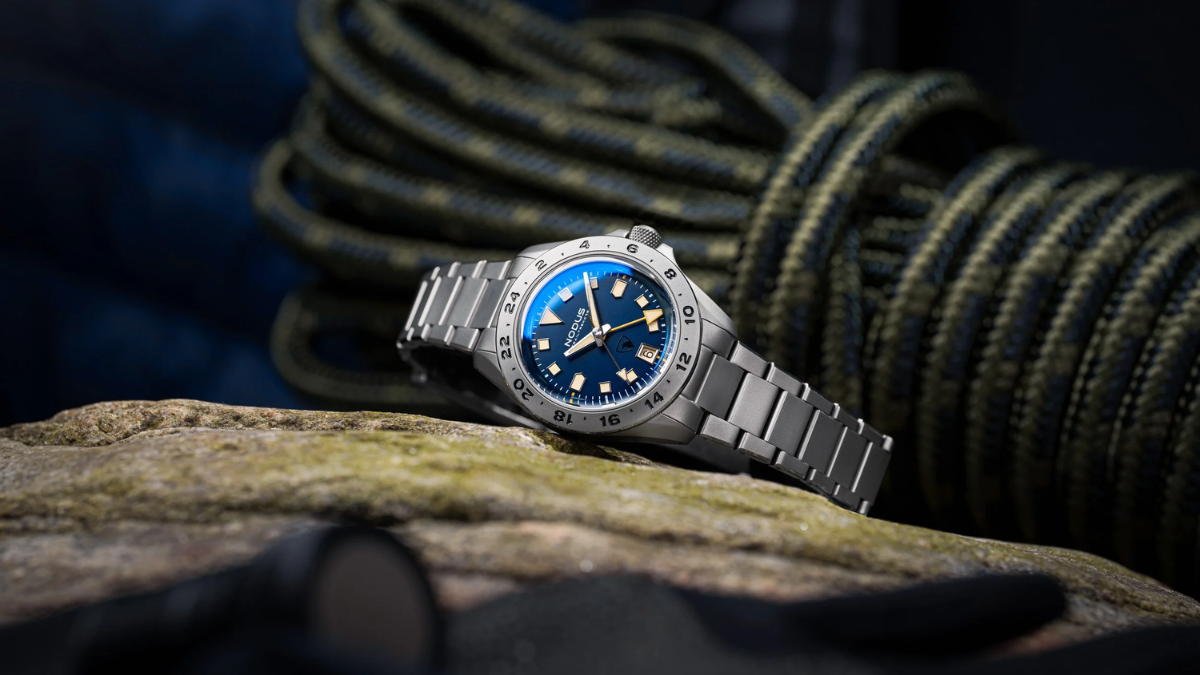
In the crowded world of modern tool watches, it takes something genuinely compelling to stop enthusiasts mid-scroll. Yet the newly released TrailTrekker Basecamp, a collaboration between Nodus Watches and Raven Watches, is doing exactly that.
At first glance, it looks like a rugged field watch built for exploration. Look closer, and the details reveal a far more ambitious story: a purpose-built GMT tool watch designed for real-world travel, backcountry expeditions, and collectors who appreciate serious engineering without a four-figure price barrier.
If you’re new to this category, you may want to read our complete guide to GMT watches to understand how these dual-time travel watches actually work.
And at $875, the TrailTrekker Basecamp may quietly become one of the most talked-about GMT releases in the enthusiast space this year.
The TrailTrekker project isn’t just another watch collaboration designed to generate hype. It grew from a long-standing friendship between the teams behind Nodus and Raven.
Nodus Watches has built its reputation on modern tool watches that emphasise practical engineering and refined manufacturing. Meanwhile, Raven Watches, a Kansas-based independent brand, has spent years crafting durable watches built with adventure and outdoor use in mind.
Their shared philosophy made the collaboration almost inevitable. The result is Project TrailTrekker, a watch designed around the idea of exploration, combining Raven’s rugged ethos with Nodus’ manufacturing precision and modern design approach.
The Basecamp model represents the foundational version of that concept. Just as every expedition begins at a basecamp, this watch returns to the core principles of durability, clarity, and reliability.
A Modern Explorer With Purpose
At its heart, the TrailTrekker Basecamp draws inspiration from one of the most iconic exploration watches ever created: the Rolex Explorer II.
When Rolex introduced the Explorer II in the early 1970s, it wasn’t designed primarily for frequent flyers. Instead, it was created for spelunkers, cave explorers who needed a 24-hour display to distinguish day from night deep underground.
The TrailTrekker Basecamp embraces that same philosophy. Rather than chasing flashy aesthetics, it focuses on readability, utility, and ruggedness, qualities that matter when a watch becomes an actual tool rather than a desk accessory.
Dial Design 
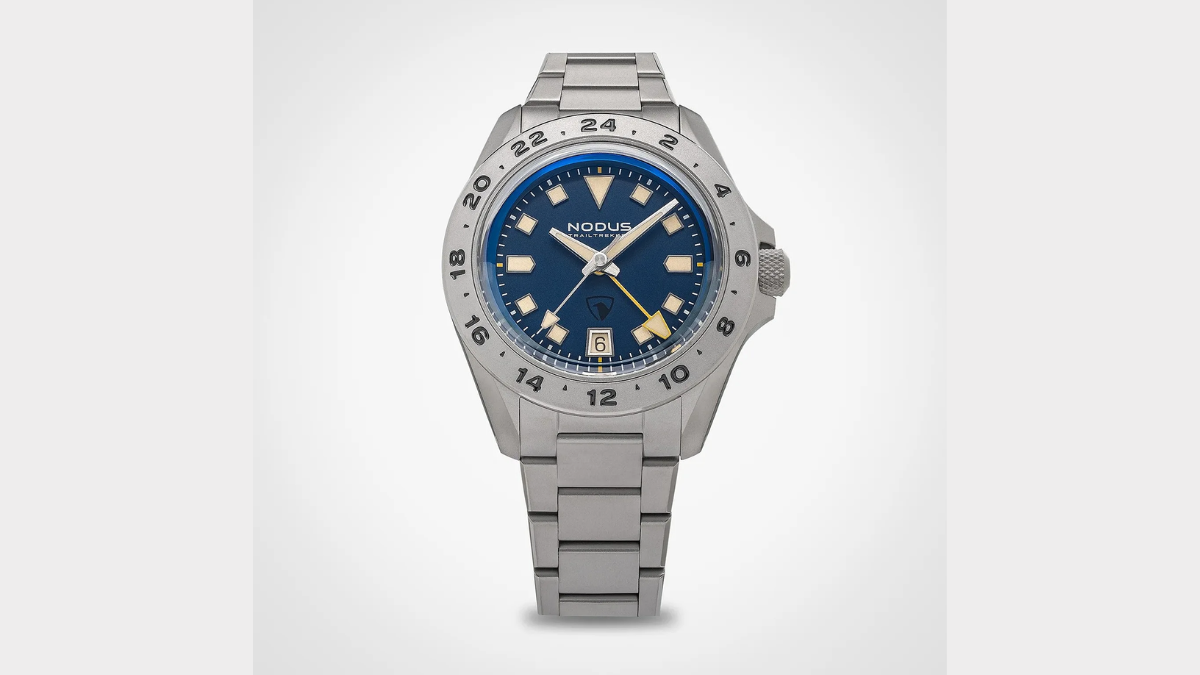
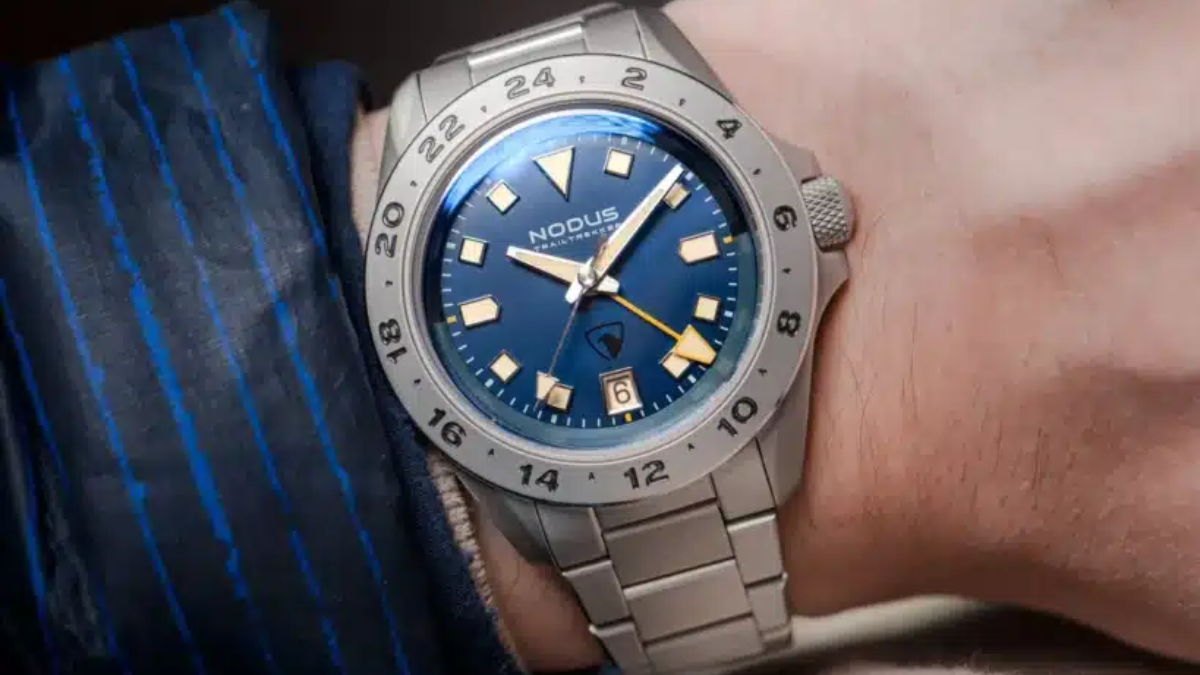
The first thing most enthusiasts notice is the dial. A deep matte blue surface gives the watch a strong presence while remaining understated enough for everyday wear. The finish avoids glare and reflections, reinforcing the tool-watch DNA.
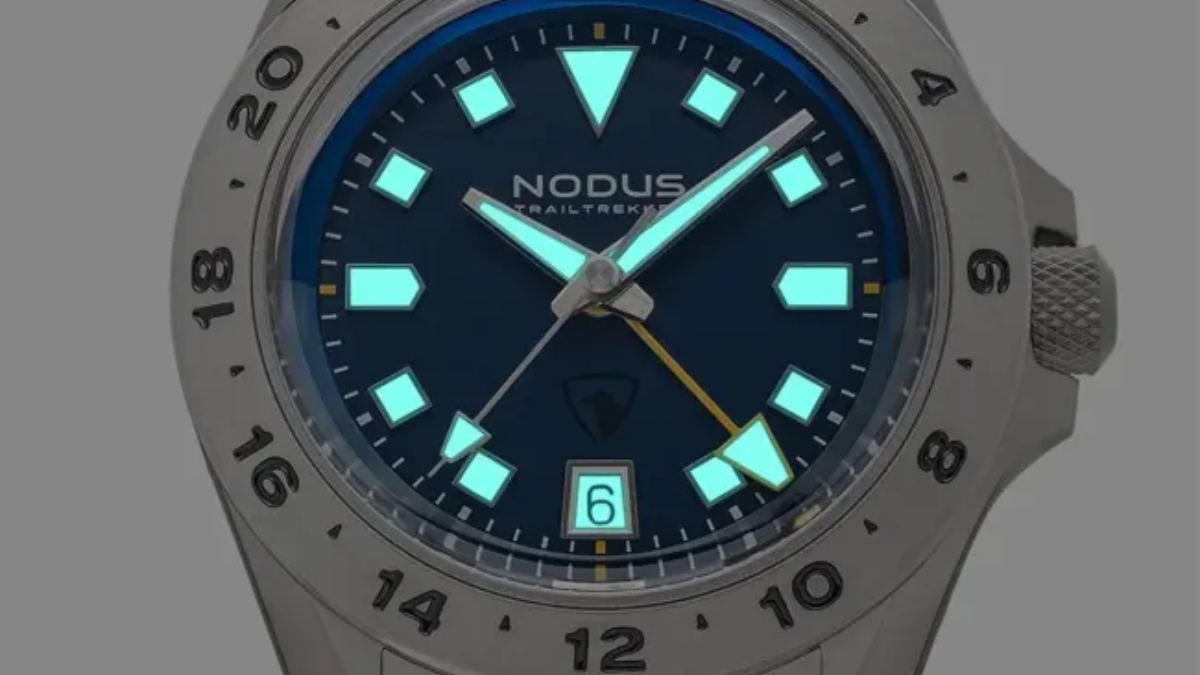
Large applied hour markers and bold hands are filled with Swiss Super-LumiNova Old Radium X1, creating a warm vintage-inspired glow in low light.
The layout prioritises legibility:
Bold hour markers
Clear minute track
High-contrast hands
Subtle yellow accents on the GMT hand
The date window at 6 o’clock is framed but integrated carefully into the dial, avoiding the awkward imbalance that often affects GMT watches. Everything about the dial feels deliberate. Nothing feels decorative for its own sake.
The True GMT
One of the most important features of the TrailTrekker Basecamp sits beneath the dial: the Miyota 9075 GMT movement. Unlike many affordable GMT watches that use a caller-style GMT function, the Miyota 9075 offers true GMT functionality, the same style preferred by travellers. This means the local hour hand can be adjusted independently, making time zone changes quick and intuitive.
Key movement specifications include:
Calibre: Miyota 9075 GMT
Origin: Japan
Jewels: 24
Power Reserve: 42 hours
Regulation: ±8 seconds per day (regulated by Nodus)
For enthusiasts familiar with GMT watches, this feature alone places the TrailTrekker in a much more competitive category. True GMT functionality is still relatively rare below the $1,000 mark.
If you’re curious about how this differs from standard GMT mechanisms, you can read our guide explaining the difference between true GMT and office GMT watches.
Case Design
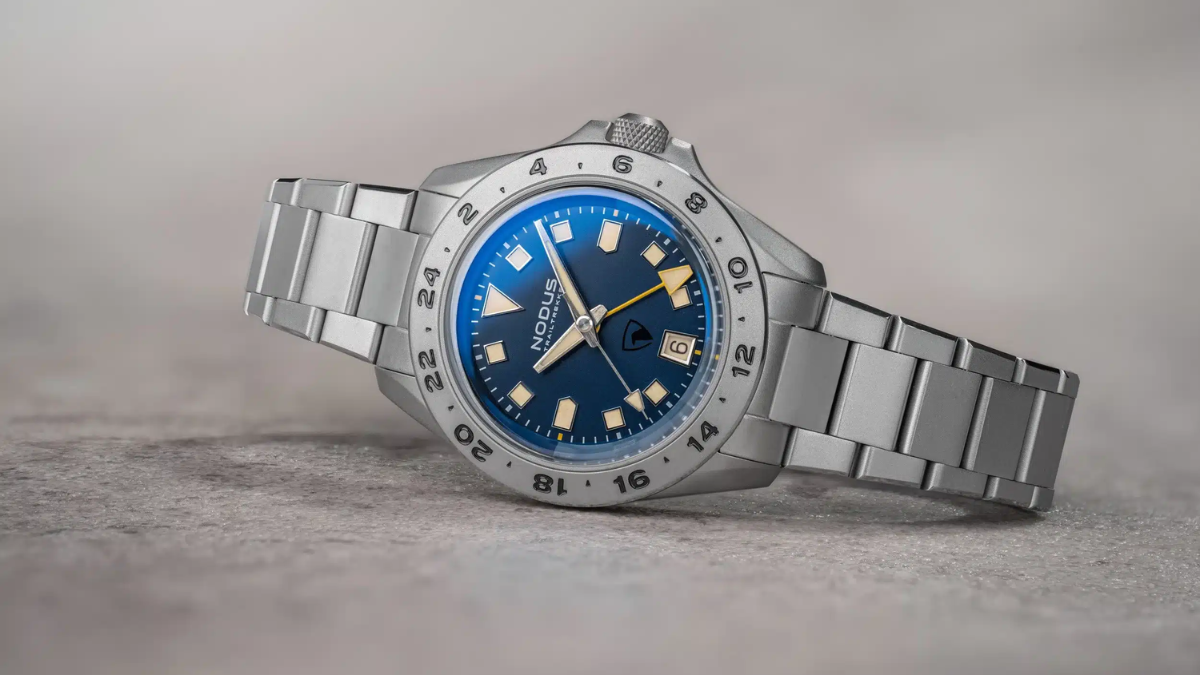
While many modern watches aim for luxury polish, the TrailTrekker leans firmly toward durability. The case is crafted from 316L surgical-grade stainless steel, measuring:
39.5mm case diameter
11.8mm thickness
46.6mm lug-to-lug
20mm lug width
This sizing places it in a sweet spot for most wrists, compact enough for daily wear but substantial enough to feel like a true tool watch. The sandblasted matte finish helps hide scratches and scuffs that naturally occur during everyday use or outdoor activities.
A fixed 24-hour hardened steel bezel surrounds the dial, reinforcing the GMT functionality while maintaining a rugged, utilitarian appearance.
Additional durability features include:
Screw-down crown
200 meters of water resistance
Crown guards for protection
In short, this isn’t a watch designed to stay pristine in a display case.
Protecting the dial is a box-shaped sapphire crystal, a design choice that subtly enhances the watch’s vintage tool aesthetic. The underside includes blue anti-reflective coating, reducing glare and improving readability in bright conditions. It’s a small detail, but one that dramatically improves real-world usability, especially when outdoors.
Bracelet
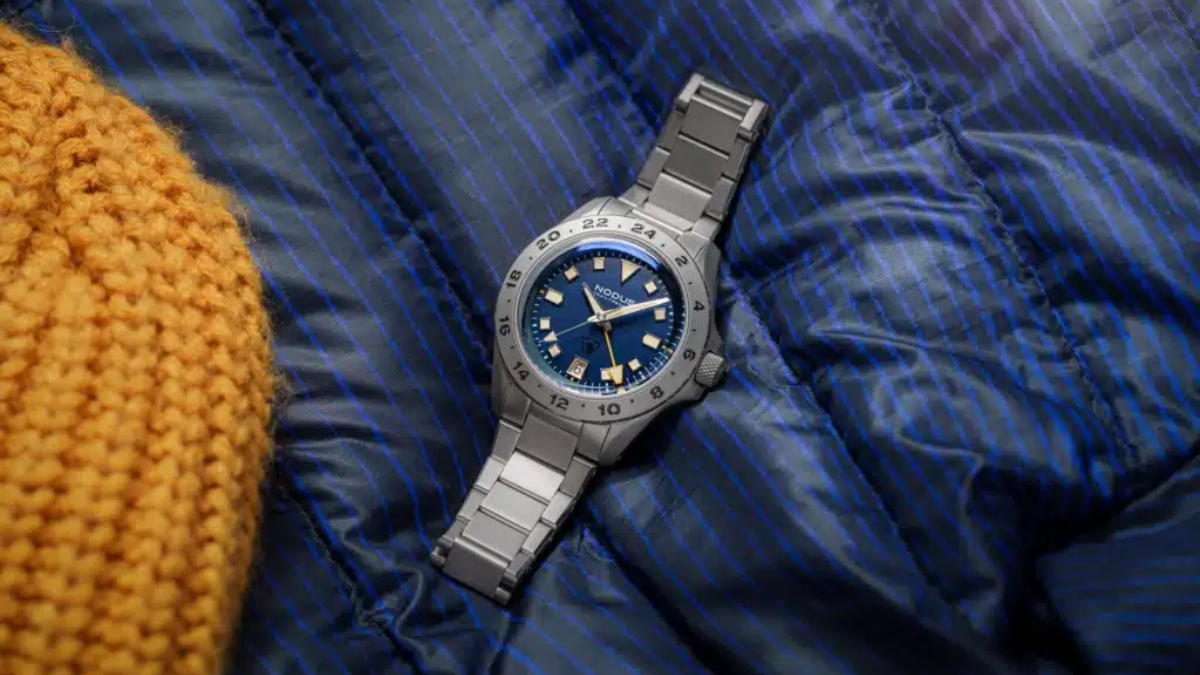
Watch collectors often obsess over bracelets, and for good reason. A poorly designed bracelet can ruin an otherwise great watch.
Fortunately, the TrailTrekker avoids that trap. The stainless steel bracelet features a 20mm to 16mm taper, giving it a comfortable, balanced feel on the wrist.
More importantly, it includes the Nodus Extension Module (NEM) clasp, which allows quick micro-adjustments without tools.
Add quick-release spring bars, and swapping straps becomes effortless. These are small engineering details that enthusiasts immediately appreciate.
Designed and Assembled in Los Angeles
While the movement comes from Japan, the TrailTrekker Basecamp is designed and assembled in Los Angeles by Nodus Watches.
For collectors who follow the independent watch scene, this detail adds credibility. Nodus has built a reputation for careful regulation, quality control, and thoughtful design decisions that elevate their watches above many competitors in the same price range.
Why Collectors Are Paying Attention
The TrailTrekker Basecamp sits at an interesting crossroads in today’s watch market. It combines several attributes collectors are actively seeking:
True GMT functionality under $1,000
Balanced, wearable case dimensions
Independent brand collaboration
Tool-watch authenticity
Adventure-focused design
In a market dominated by luxury brands and inflated secondary prices, watches like this represent something refreshing: serious watchmaking without unnecessary hype.
That’s why collaborations like this often develop quiet cult followings among enthusiasts.
Final Thoughts
The TrailTrekker Basecamp isn’t trying to imitate luxury icons or chase fleeting trends. Instead, it embraces a different philosophy, one rooted in exploration, practicality, and honest design.
For travellers, outdoor enthusiasts, and collectors who appreciate thoughtfully engineered independent watches, it offers a compelling package:
A true GMT movement, rugged build quality, balanced proportions, and a price that remains surprisingly accessible. At $875, it sits in a rare sweet spot where mechanical sophistication meets real-world usability.
And if the growing attention around independent tool watches continues, the TrailTrekker Basecamp may become one of those sleeper releases enthusiasts look back on as a hidden gem.